
A hose nozzle that leaks when closed can be failing in two different places. Water at the hose-to-nozzle joint usually points to the connection or its washer. Water continuing to emerge from the nozzle tip points toward the nozzle’s closing mechanism. A few drops after the tap has been turned off may simply be water draining from the hose or nozzle. Find the exact wet point before replacing a part.
First, locate the leak
Dry the nozzle, its hose coupling and the short section of hose behind it. With the nozzle closed, briefly turn on the tap and watch where the first new water appears. A damp ring around the coupling is different from a steady drip at the outlet. Water coming through a trigger pivot, thumb control or body seam suggests another failure area. Do not try to identify the source from a puddle below the tool; water can run along the body before it falls.
Next, close the tap. Open the nozzle away from people and delicate plants to release the water trapped in the hose. Wait for flow to stop before disconnecting anything. If the nozzle drips only during this drain-down and then stops, repeat the observation with the tap on and the nozzle closed. Continuous dripping under supply pressure is the useful symptom for diagnosing a failed closed position.
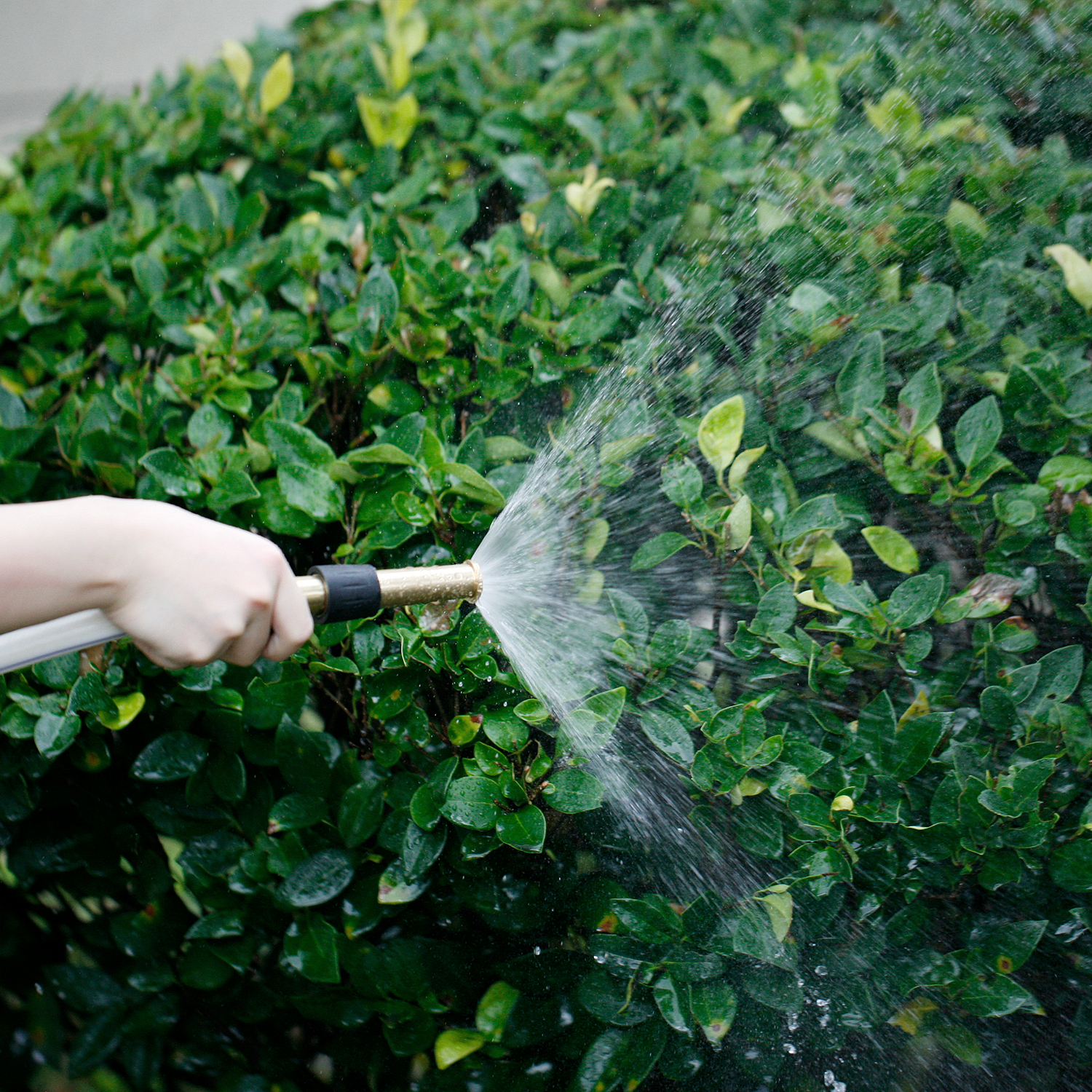
Water at the hose connection: check the washer and seating face
Most threaded garden hose connections rely on a flat washer compressed between the hose coupling and the nozzle’s inlet face. A missing, flattened, split or displaced washer can let water escape around the joint even when the threads engage. Shut off the tap and relieve pressure before removing the nozzle. Look inside the female coupling for the washer and inspect the mating face on the nozzle. Remove visible grit without gouging either sealing surface.
Fit a washer of the correct type for that coupling if the existing one is damaged. Reconnect squarely so the threads start without resistance, then tighten as the product instructions require. Forcing a misaligned coupling can damage the threads or distort the washer. If water still appears at the same joint, inspect the coupling for cracks, a loose hose attachment or an inlet face that cannot seat evenly. Replacing the nozzle’s internal seal will not fix a leak outside the threaded connection.
Water at the tip: check the closed position
A twist nozzle controls flow as its adjustable parts move toward a closed position. A trigger or thumb-control nozzle uses a different internal valve arrangement. With the tap off and pressure released, check that the control moves through its normal range and reaches its intended stop without forcing it. Grit at the outlet or a worn sealing surface can prevent full closure. A damaged spring, control or internal seal may cause a similar symptom on other nozzle designs.
If the maker provides a cleaning or service procedure, follow that procedure for the exact model. Some nozzles have accessible screens or replaceable seals; others are built as non-serviceable assemblies. Do not pry apart a sealed body or substitute an arbitrary O-ring. A part that looks close can bind the control or fail to seal. If the nozzle is cracked, the control no longer returns properly, or the leak continues after approved cleaning and service, replace the affected unit or contact its supplier.
After cleaning, test one change at a time. Refit the same nozzle to the same hose and washer, open the tap briefly, and observe the outlet with the control at its normal closed stop. Then turn the tap off and release pressure. If you also replace the washer, repeat the test separately. Changing the washer, hose and nozzle together may stop the water, but it leaves the original cause unknown. This matters when a buyer is reviewing multiple returns from one batch.
What the leak pattern tells you
| Observed water | Area to check first | Next action |
|---|---|---|
| At the hose-to-nozzle coupling | Flat washer, inlet face, thread alignment | Shut off and drain the hose; inspect and reseat the connection. |
| From the tip while the tap is on and the nozzle is closed | Nozzle control and internal closing surface | Check the intended closed position, then use the model’s approved cleaning or service steps. |
| A few drops after the tap is off | Water remaining inside the hose or nozzle | Let it drain and see whether dripping stops before calling it a continuing leak. |
| From a body seam or control opening | Damaged housing or internal seal | Stop using the affected unit and check the maker’s replacement or service guidance. |
Do not leave the hose pressurized between uses
A closed nozzle is a convenient short pause during watering, but the tap still feeds the hose when it is left open. That leaves the hose, couplings and nozzle under supply pressure. Turn off the tap after use and release the remaining water through the nozzle before storage. This also makes a later inspection safer and helps separate residual drainage from a leak that occurs only under pressure.
In freezing conditions, follow the hose and nozzle makers’ storage instructions and drain water as directed. A damaged fitting or body can leak in more than one place after freezing. If a leak appears after a drop or impact, inspect the inlet threads and body as well as the control.
A nozzle that only drips when the tap remains open may seem harmless during a short break. For a permanently connected hose, however, the closed nozzle is the last barrier in a pressurized line. A connection washer can also start to seep while nobody is watching. Close the upstream tap for storage or overnight pauses. If the installation includes a separate shutoff valve, confirm which valve actually isolates the hose and do not assume a pattern selector provides shutoff.
For product teams: record the failure before changing a design
For a retailer or distributor handling returns, “nozzle leaks” is too broad to identify a corrective action. Record the model and batch, the water exit point, whether the tap was open, whether the control was fully closed and whether the leak stopped after pressure was released. Photograph the connection and keep the hose coupling and washer when they are part of the complaint. A connection failure should not be grouped with a tip leak in a supplier report.
A useful sample check separates at least three observations: leakage at the inlet joint, leakage from the outlet in the closed position, and leakage around the control or body. State the inlet condition, hose and washer used, control position, observation period and any adjustment made. Keep results tied to the exact model. A visual demonstration of a dry nozzle does not establish a universal pressure rating or a service-life claim.
When a customer sends a video, ask them to begin with a dry tool and show the first place that becomes wet. The clip should also show whether the tap is open and the nozzle control is fully closed. A close-up of drops falling from the tip can be misleading if water has just been drained from the hose. Save the model identification and the date of the observation with the clip. These simple records let the supplier distinguish a faulty seal from a mismatched or damaged hose connection without asking the customer to dismantle a pressurized product.
When comparing replacements, review the Hengxin hose nozzle range by control style and connection. Ask for a sample of the proposed model and its current component information. For a bulk inquiry, share the destination market, intended hose connection, expected use, quantities by model and the leak location seen in your current range. Send those details to Hengxin so the response can address the actual joint or control involved.