
To judge how long a metal hose nozzle will hold up, check the inlet threads, valve stem, seals and control mechanism as well as the body. Compare samples for leakage, return action and spray control before and after repeated use. Weight and the body alloy alone tell you little about how well the nozzle will keep closing.
Imagine two nozzles on the sample bench. Both feel substantial. One has a replaceable hose washer and a protected control. The other has a wider head that is easier to position with gloves, but the head takes the impact if the nozzle lands face first. Those differences can matter more to a garden brand or distributor than a few grams of metal. Start with how the customer will use the nozzle, store it and deal with a worn part.
Ask which parts are metal
A finished nozzle can combine a metal housing, a valve stem of another alloy, elastomer seals and a plastic or rubber grip. A spring may return a trigger to its closed position on some designs. A simple twist nozzle uses a different mechanism, so there is no reason to ask for a spring specification unless the assembly has one. A parts list or a supplier approved drawing is more informative than the word “metal” on a carton.
| Part | What it does | O que gravar |
|---|---|---|
| Body and inlet | Carry the water path and the load from the attached hose. | Body and inlet materials, mating thread and condition of the sealing face. |
| Valve stem and seat | Control the flow and form the closure inside the nozzle. | Travel, smoothness and whether water continues at the outlet after closure. |
| Trigger, lever or twist sleeve | Transfers hand movement to the valve or outlet adjustment. | Wet grip, play at the pivot and return action on spring loaded models. |
| Inlet washer and internal seals | Seal different joints and moving parts. | Location of each seal, which ones can be replaced and the approved spare part references. |
| Finish and grip | Cover exposed surfaces and affect how the nozzle feels in use. | Grip movement, wear at edges and any loss of finish near working joints. |
Keep the inlet washer and the internal shutoff seal separate in the inspection record. A worn washer can let water escape where the hose attaches even when the valve closes properly. A dry inlet and a continuing drip from the tip with the water supply still on point to a different part of the assembly. Use the closed nozzle leak guide to identify where the water first appears before deciding what to inspect.
Check the places that take a knock
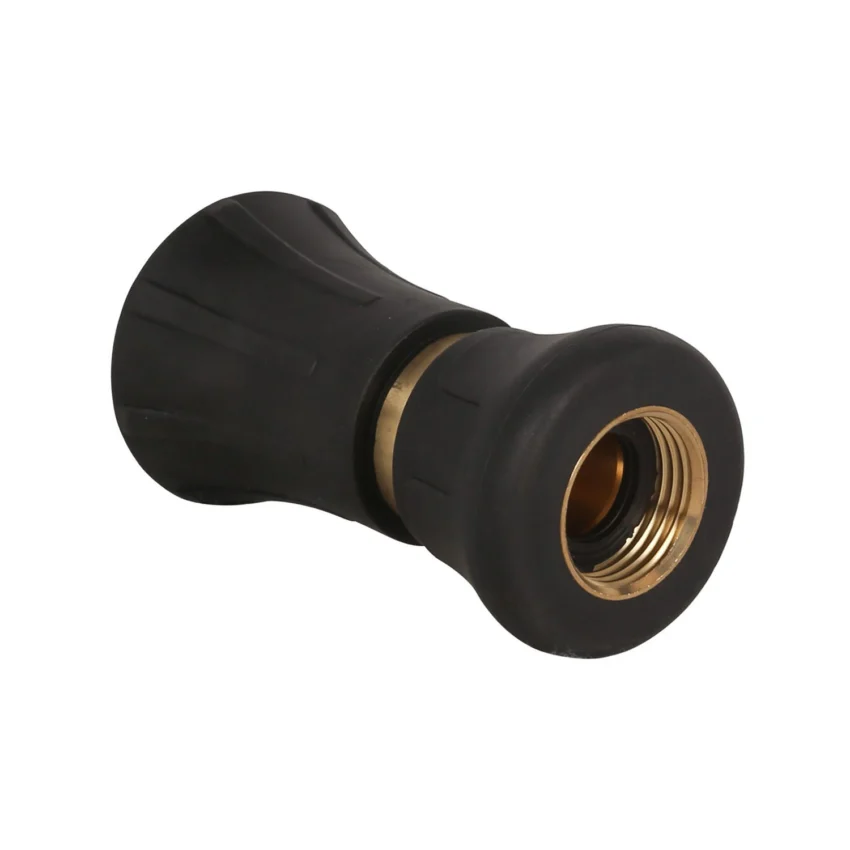
Look at where a nozzle will hit the floor when someone releases it. On a pistol grip model, the spray head or the exposed control may take the impact. On a twist nozzle, look at the tip, the end of the sleeve and the inlet threads. If users regularly drag the hose around a bench or across paving, examine how the hose coupling pulls on the inlet and how well users can grasp the control with wet hands.
A thicker grip can add weight without strengthening the inlet. Two samples of similar weight can have different thread engagement, lever supports and seal designs. Weigh them if balance or shipping weight matters. For durability, record which part was loaded and what changed afterward. A scuff on a grip is a different buying issue from a shifted spray head or a valve that will no longer close.
Check the finish where it is most likely to wear: around the inlet collar, the edges of a sleeve and any surfaces that rub during adjustment. After agreed wetting and drying exposure, look for peeling, deposits, corrosion or changes in how the control moves. A visible deposit alone does not identify its cause. Record where it appeared, the conditions and whether it affected the fit, movement or seal.
Compare samples with the same test conditions
Ask for an assembled sample and an approved drawing or spare parts list if available. Agree on the intended hose connection, operating limits and checks with the supplier before applying water pressure. Use the same mating fitting and water conditions on comparable samples. Choose cycle counts, inspection intervals and acceptance limits for the intended use. Keep them with the result so a purchasing team can distinguish a short sample check from a documented endurance test.
- Set a baseline. Record model, revision, inlet and sealing arrangement. Photograph the inlet face and exposed control. Fit the nozzle to its intended hose coupling and check the usable adjustment range. For a trigger nozzle, check that the trigger releases consistently.
- Check for leaks in use and at closure. Note the inlet pressure and whether it was measured with water flowing or with the nozzle closed. Record leaks at the hose joint, body or control separately from continuing flow at the tip. Allow residual water from the tip to drain before judging a closed valve.
- Repeat normal operation. Open and close the control through normal travel. Repeat the baseline checks at the agreed intervals. Record when a change first appears, such as sticking, increased play, weaker return action or an intermittent drip. Use the same observation interval for each sample.
- Check handling after impacts. Use a separate sample for drop testing where practical. Shut off the supply, relieve pressure and disconnect the nozzle before the drop. Record the surface, height and orientation. Inspect for cracks, sharp edges or damaged threads before any water check. Keep structurally damaged samples out of pressure testing.
Write down what a failure looks like before anyone evaluates a sample. A rim scuff might be a cosmetic defect for a retail pack. A bent inlet, a trigger that sticks open and a change in the spray pattern are separate functional findings. If your protocol allows a washer change, record the result before and after that change so the repair does not erase evidence about the original assembly.
A practical result describes the condition and its consequence. For example, “the trigger returned freely at the start and stuck twice at the final inspection” gives engineering and purchasing a specific issue to follow up. Note the sample ID and when it happened so a second evaluator can check the same unit. Keep any wet storage or cold exposure results separate from the cycle results. An assembly stored with water inside and one drained before storage have been through different conditions.
Keep a parts and service record with the approved sample
If the supplier permits disassembly, use a separate, fully depressurized sample and follow the supplier’s procedure. Photograph the parts in order and record where the washer, stem, seals and return spring sit, if fitted. Compare the parts against the drawing or parts list. Keep unopened samples for functional comparisons so disassembly does not change the results. For a sealed assembly, log which whole assembly would need to be replaced and what that means for returns.
Before approving a purchase, put the following fields on the same sample record:
- Model and revision, intended market, mating hose or connector, and a photo of the sealing face.
- Body, inlet, stem, spring and seal materials as applicable, with the drawing or parts list used to identify them.
- Baseline and post test condition, including where any leak appeared and the pressure and control position at that time.
- Parts that can be serviced, approved spare references, and any acceptance checks still required before bulk approval.
For repeat orders, keep a photo of the approved inlet and controls alongside the signed sample record. If a later sample has a different grip, inlet collar or valve revision, use that record to decide which checks to repeat. A change in packaging may only need a packing check. A new sealing face or valve assembly warrants checking fit and closure again before treating the two versions as interchangeable.
When choosing samples for a new range, start with the Gama de bicos para mangueiras de jardim Hengxin. Send Hengxin the intended use, hose connection and estimated volume along with the candidate model or a reference sample. Include any test conditions or spare part requirements that affect your approval so they can be addressed against the proposed model.