
If an impact sprinkler sprays but won’t rotate, measure pressure at the head while it runs and compare it with the range for that model and nozzle. Shut off the water and relieve pressure before checking the nozzle, arm and spring. If the head stops at an arc limit, inspect the trip mechanism.
A sprinkler that never takes a step gives you a different clue from one that waters its first pass and stops at the far edge. Watch one start from a safe position and note what the water stream, impact arm and head each do. If the fault comes and goes, record whether it coincides with another zone opening or the head arriving at the same point.
Separate the symptoms before taking anything apart
The stream drives the impact arm. A spring returns the arm so it can repeat the stroke, and the repeated impact advances the head. On a part-circle design, the trip mechanism changes direction at the ends of the arc. You can use those movements to narrow down the checks even when the head still looks as if it is watering.
| What you see | What to check first |
|---|---|
| Weak or irregular stream with little arm movement | Running pressure, upstream restrictions, inlet screen and nozzle opening. |
| A steady stream with an arm that hardly moves | The arm’s free travel, its spring and whether the stream reaches the arm as intended. |
| The arm cycles but the head barely advances | External interference, a bent arm or wear and drag at the swivel. Check the running supply too. |
| The head travels to one end and fails to reverse | Trip pin or lever, collars and trip spring on part-circle models. Verify pressure before ordering parts. |
Measure at the head under normal operating load
Find the model and nozzle identification first. Manufacturers can specify different operating ranges or measurement points for different heads and nozzle combinations. Use the documentation for the installed setup and a rated gauge connection as close to the specified point as practical. Note exactly where you measured. Keep the subject head and the usual zone load running for the reading, with the gauge fitted while the line is off and depressurized.
A tap can show normal static pressure when nothing is drawing water. Once the zone opens, a long hose, a kink, a partially closed valve, a dirty filter or other heads drawing water can reduce the pressure available at the sprinkler. Check the pressure at the affected head while it is spraying. If the supplier provides flow data for the installed nozzle, compare available or measured operating flow with that data. A bucket filled from an open hose measures free discharge, which does not establish what the same supply can deliver at the head’s required pressure.
Look for a pattern in the readings. When several heads slow down together, start with the shared feed, valve or filter. When one head stops on an otherwise stable zone, check its connection, inlet and moving parts. A service team can also compare two compatible heads with the same nozzle on the same known supply, changing one part of the setup at a time. Isolate the water before swapping or moving heads. If the running pressure is above the model’s range, have the feed checked and brought within range before continuing.
For example, suppose a rental sprinkler turns when tested alone but stalls whenever a second head on the same line comes on. Take a running reading in both arrangements at the same gauge point. If the reading falls outside the specified range only with the second head operating, investigate the shared supply before replacing the first head. Keeping the nozzle and hose setup fixed makes the two readings useful.
Shut off the water and inspect the arm and nozzle
Isolate the water supply and allow the line to depressurize through the system’s intended drain or service method. Disable any automatic start while you work. Wait for movement to stop, then check that the head is upright and that grass, a bracket or the hose cannot foul the rotating assembly.
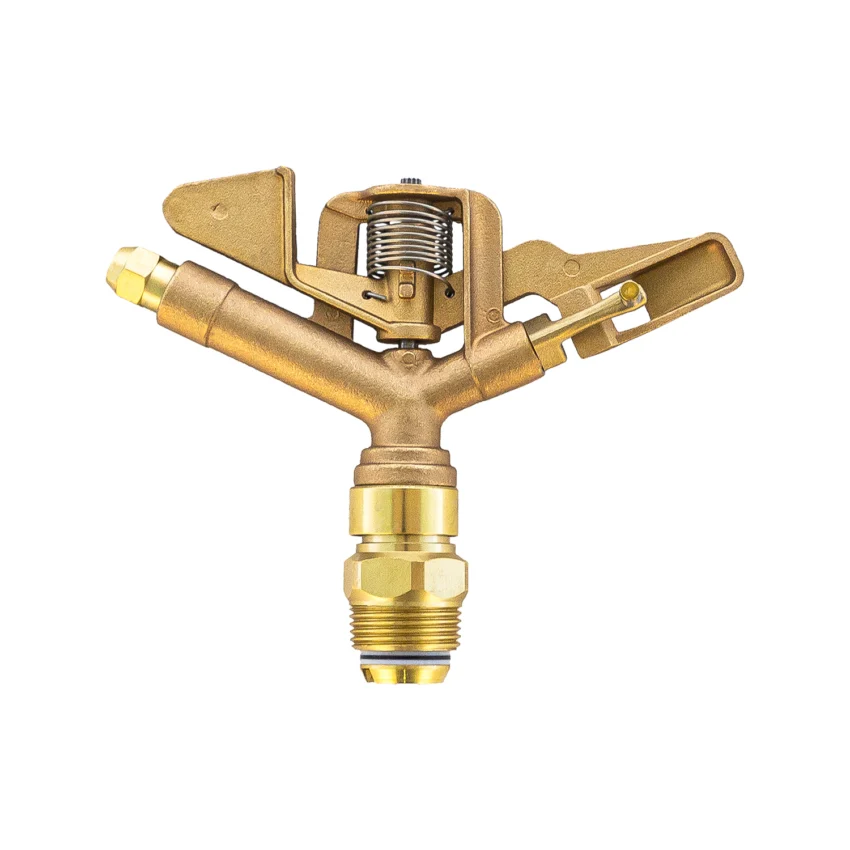
Inspect the visible arm and spring for debris, a displaced spring or bent parts. Where the manufacturer’s service instructions permit a movement check, feel for binding without forcing the arm or twisting the head past its stops. If the supply was adequate and the arm cycled without moving the head, report whether the swivel felt stiff through the whole sweep or caught at one point. The supplier can use that distinction to decide whether to check the bearing assembly or look for interference or damage.
A partially blocked nozzle can distort the jet even when water is still coming out. Inspect the outlet, and check a serviceable inlet screen if the model has one. Use the maker’s cleaning method and rinse accessible debris with clean water. Leave the opening at its original size. Avoid drilling it out or applying oil to free a stiff assembly. If debris returns after cleaning, inspect the condition of the line and filtration before putting a replacement head into the same setup.
When the sprinkler stops at one end of its arc
On an adjustable part-circle model, compare the visible trip pin and collar positions with the manual. Inspect both ends of the sweep. A missing stop, a disengaged pin or a damaged trip spring can prevent reversal. If the head always stops at the same point, photograph the mechanism as found before moving the settings. A full-circle head may have no reversing parts, so verify the model before treating a missing collar as damage.
Record whether the arm keeps cycling at the stopping point. If the head stalls when the whole jet weakens or the arm goes quiet, check running pressure again under the conditions that produced the fault. If the arm keeps striking and the head repeatedly fails at a set boundary under a stable supply, the trip mechanism deserves closer inspection.
What to send with a distributor service case
Take a full photo showing the head, base and hose or riser connection. With the water isolated, add close-ups of the nozzle opening, arm and spring. For a part-circle head, include the trip mechanism and both stops. A short clip filmed from outside the spray area can show whether the arm continues to move as the head reaches its stopping point. Include the model, nozzle marking, running pressure and gauge location, and any other outlets operating at the time.
Take a head out of service if the body is cracked, the threads cannot hold securely or rotation is erratic because of visible damage. Ask about a service kit only if it is listed for that model and the maker provides a repair procedure. A compatible replacement needs to fit the inlet and work within the actual supply and coverage requirements. Compare the Hengxin brass impact sprinkler range or the portable garden sprinkler range if the complete assembly needs replacing. For a distributor service or replacement inquiry, send Hengxin the model and operating details along with the photos.