
Test a thumb-control hose nozzle with water running. Check whether users can reach the lever, start and stop flow with one hand, and return to a gentle spray without overshooting. Measure opening and closing force separately, then repeat the low-flow and leak checks after cycling the control.
A nursery worker moving from tray to tray may need to turn the water down before reaching a row of young plants, then bring it back up for larger pots. A lever that feels smooth on an empty nozzle can still be hard to reach once the hose is attached. Another sample may be easy to move but deliver a burst before it settles. Those are different problems. A useful sample trial tells the buyer which one the user is likely to notice.
Identify what the thumb lever actually controls
On a nozzle with a dedicated thumb valve, the lever can adjust the amount of water passing through while the hand stays around the grip. Some designs hold the lever where the user leaves it and require deliberate movement back to shut off. Other spray guns have a finger trigger and a separate thumb control that limits flow or locks the trigger. A selector dial or twist tip may also change the outlet shape. Identify which control opens the water, which changes the pattern and how the user closes the nozzle.
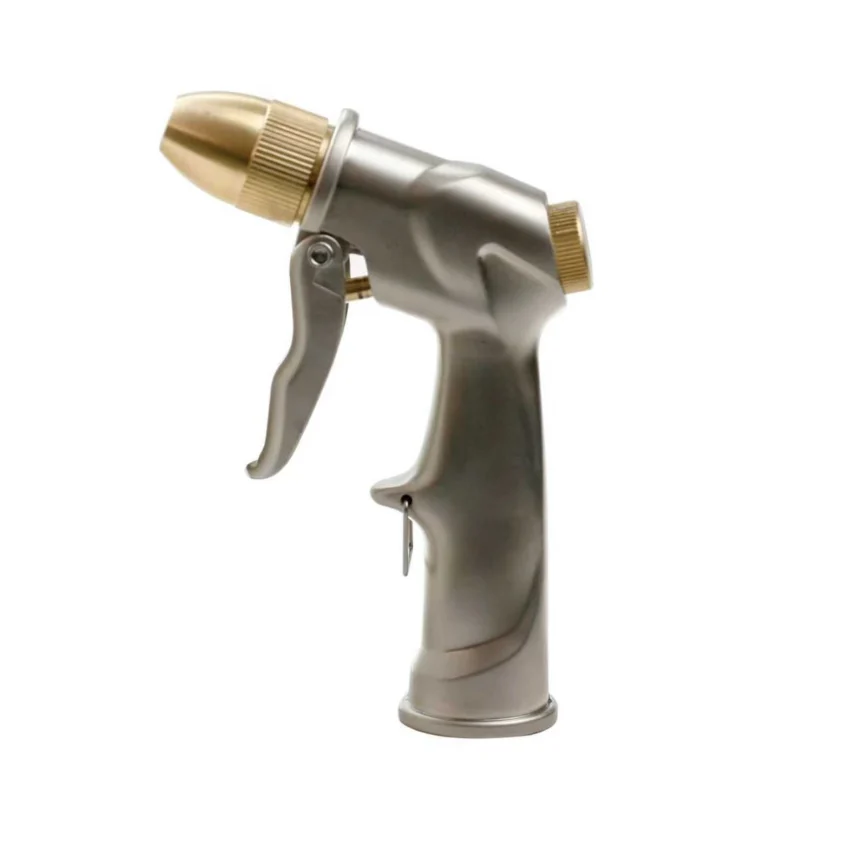
Pressurize each sample only within its stated operating limits. Use the same hose, mating connector and selected spray pattern for the comparison. Record inlet pressure near the nozzle during flow measurements and note when it changes. A weak supply or a different hose connection can make an otherwise useful control look ineffective. Confirm the intended connection before comparing samples, especially if your range serves different thread markets. See the guide to GHT, BSP and NPT connections.
Map lever travel to usable flow
Pick a pattern the intended user will use regularly. For trays and small pots, for example, that might be a gentle shower. On the bench, photograph or mark the closed stop, the first position where water starts to flow, a usable low position and the fully open stop. Keep the pattern fixed while you compare the lever. A position halfway along the visible travel can produce a very different fraction of full flow on two designs.
Measure flow at the selected positions with an inline meter or a timed catch that captures the whole spray. If water escapes the collection vessel on a wide pattern, change the collection setup before using the readings. Record volume and time so the result can be checked. For example, collecting 0.6 litres in 20 seconds gives 1.8 L/min. That is a calculation example. Choose the target rate for the watering task and test the actual samples against it.
Approach the same low position twice: once from shutoff and once from a higher setting. Remove thumb pressure each time on a model designed to hold its setting. Watch whether the lever moves, the spray starts and stops, or the rate changes during the observation. If a nozzle only gives the desired spray when the operator holds the lever at one exact spot, record that limitation. It will be visible to someone trying to water several groups of plants without looking down every time they adjust the nozzle.
Measure opening and closing force separately
For a repeatable bench reading, support the body in a padded fixture without squeezing the handle or obstructing the lever. Use a force gauge on the part of the lever a thumb actually contacts. Note the contact point and direction of push, and keep them consistent for repeat readings on that model. Moving the gauge closer to the pivot changes the reading. For different lever designs, document those points in photos so the numbers can be interpreted correctly.
Measure the peak needed to move away from the closed stop, the effort around the low-flow setting and the peak needed to reach shutoff. Record the values in newtons or pounds-force. Note any sudden release or sticking. If a gauge shows low opening force but the flow jumps at the first movement, the sample may still be a poor fit for gentle watering. If closing takes more effort than opening, pay particular attention to whether the people in the trial can reach the stop comfortably.
Repeat the readings at a similar movement speed. Record a range if the peak varies from one attempt to the next. Keep dry bench readings separate from those collected with the nozzle connected and operating. That makes it easier to compare like conditions when a revised sample arrives.
Give operators a task they can repeat
Use people with different hand sizes and include left and right hands. Have each operator run the same short sequence with dry hands, wet hands and the type of gloves used on the job. Let the hose hang as it would in service. Ask each person to start a gentle spray, point at a target, increase flow, return to the gentle setting and shut off. Have them try the controls from a normal working grip before changing their hand position.
Write down what happened before asking what felt comfortable. Could they reach and move the lever with their thumb? Did the nozzle rotate in the hand? Did they need the other hand to find the low setting or close it? A buyer can use those observations to compare designs. A broad rating such as “easy to use” hides which step caused a problem and for whom.
Repeat the checks after cycling the lever
Pick a cycle count and inspection intervals appropriate to the intended duty. A cycle can include opening, pausing at a low setting and returning to shutoff if that resembles how the nozzle will be used. Repeat the force and flow checks at the agreed intervals. Inspect for leakage at the hose joint, around the control and at the outlet separately. For the outlet test, allow residual water at the tip to drain before judging a continuing drip with the supply on.
If the same sample is also being approved for a retail or distributor range, use the metal hose nozzle durability checklist to record inlet condition, finish and service parts alongside the lever results.
| Enregistrement | What to include |
|---|---|
| Setup | Model and revision, mating hose and fitting, tested pattern, inlet pressure and how it was measured. |
| Lever travel and flow | Reference photos for the tested positions, measured flow and the result when approaching low flow from both directions. |
| Operating effort | Opening and closing peaks, gauge contact points, any sticking and when it appeared. |
| Hand trial | Hand size range, dominant hand and glove type, plus any grip changes or steps that needed the second hand. |
| Post-cycle checks | Cycles completed, changes from baseline and the location of any leaks. |
Use the Gamme de buses pour tuyaux Hengxin to compare available control styles. If a thumb lever is essential to your specification, send Hengxin the intended application, hose connection and order volume together with your target flow range, glove requirements and a reference photo or sample. Those details give both teams a specific configuration to discuss before agreeing on an evaluation.