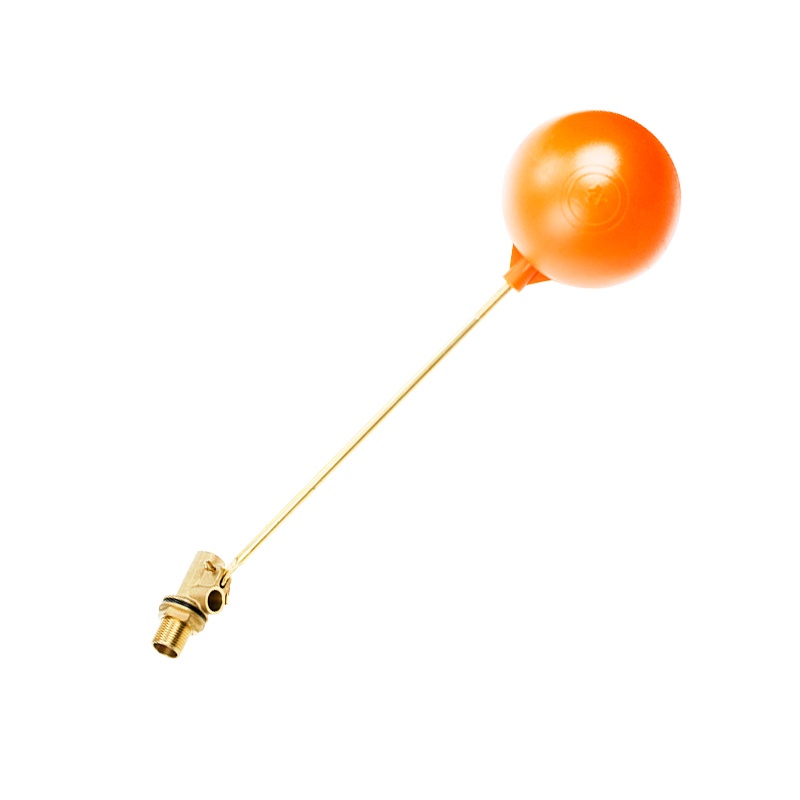

A mechanical float valve controls tank filling through the movement of its float and arm. Hengxin lists a brass float-valve product, but tank fit, inlet pressure and refill capacity must be checked for that specific model. For an equipment or replacement-parts program, provide the tank drawing and water supply conditions before selecting the valve. The float needs enough travel space to close without hitting the tank wall, lid or other fittings.

Taizhou Hengxin Valve Technology Co., Ltd. es una empresa industrial-comercial integral con 28 años de experiencia en válvula de latón fabricación. Estamos especializados en diseño, producción y venta de válvulas de latón, accesorios de tubería, productos para riego de jardines y OEM/ODM soluciones.
Taizhou Hengxin Valve Technology es un fabricante establecido con 28 años de experiencia en sistemas de válvulas de latón. Mantenemos una integración vertical completa en todos nuestros procesos de producción, ofrecer a los clientes de todo el mundo:
Record the tank opening, wall thickness, inlet orientation, available internal width and desired shutoff water level. A valve can match the inlet thread and still fail to operate because the arm or float has insufficient space. Ask for an installation drawing showing the valve body, arm pivot, float diameter and the full movement envelope. Include the position of nearby pipes, baffles and the tank lid.
If a buyer wants a different arm length or float shape, treat it as a separate design request until engineering confirms feasibility. A photograph of a similar valve does not prove that a modified float will deliver the same shutoff behavior.
Inlet pressure, valve opening and float position affect refill rate and closing behavior. Request model-specific flow data across the expected supply range and a test of closure at the target water level. Do not infer a permitted pressure range from the appearance or nominal connection size of the valve.
Tank size and expected drawdown help define the required refill rate. A buyer should also identify whether the water is potable, non-potable or part of a process. This determines which material and market compliance evidence must be reviewed for the exact wetted assembly. A general brass description is insufficient for drinking-water approval.
Obtain the model drawing and bill of materials for the body, arm, float, seal and mounting components. Verify whether the float is included in the sales unit. Check how the valve seals at the tank wall and whether a gasket or other fitting is required.
Sample testing should cover installation fit, unobstructed movement, refill behavior and closed-valve leakage at relevant inlet conditions. Record the water level, pressure, test duration and acceptance criteria. If a buyer needs a different float or packaging format, approve the final configuration and its test record before a bulk order.
Mount the proposed valve at the planned tank opening and move the float through its full travel. Check for contact with walls, baffles, the lid or other equipment. Mark the desired shutoff level and verify that the float can reach it without binding. A drawing can identify a likely fit, but a representative tank or mock-up exposes interference that may be hard to see in a product photograph.
Run the trial at the expected inlet pressure and drawdown conditions. Record refill time, water level at closure, any overshoot and leakage after closing. Repeat after several cycles to observe whether the linkage remains free. If a different arm or float is requested, test the modified configuration independently; it should not inherit the results of the original SKU.
Retain the approved assembly drawing, material list and sample revision. Confirm whether the sales unit includes a float, gasket and mounting hardware, and describe any installation limitations on the buyer’s documentation. A potable-water statement requires separate model- and market-specific evidence.
For replacement programs, record the tank model and mounting geometry supported by each approved float valve. A valve that screws into the opening may still close at the wrong level if the arm shape differs. Clear fit information is more useful than a broad claim that the part suits every water tank.
Send the target market, tank drawing, inlet location and thread, tank wall thickness, available float clearance, desired water level, supply pressure, refill demand and estimated order quantity. Identify any potable-water requirement so model-specific material and compliance documents can be checked.
Provide opening size, wall thickness, inlet orientation, internal clearance, lid position and desired shutoff level.
Use the technical data and test record for the exact model. A category page cannot establish the safe or effective range.
Compare the full float and arm travel envelope with the tank drawing, including nearby walls and fittings.
Submit a dimensioned request for engineering review. Feasibility, new test needs, MOQ and timing depend on the change.
Confirm the current bill of materials and sales unit for the selected SKU before approving a kit or replacement program.
Test the selected valve in the actual tank or a representative fixture under expected pressure and refill conditions.
Request model-specific installation dimensions, refill measurements and closure/leakage results with stated conditions.
Le invitamos a comentar sus necesidades de compra con nuestro servicio de atención al cliente.